Disposable vs Reusable School Headphones: The Total-Cost Math

The sticker price lies. A $1.39 headphone looks eleven times cheaper than a $21.89 one until you count how many times you buy each over a school year. Whether disposable or reusable is truly cheaper comes down to one thing: how often the same headphone gets used. Here is the cost-per-student-year math, and the two headphones that win at opposite ends of it.

Are disposable or reusable school headphones cheaper over time?

It depends on turnover. For one-time or infrequent use, such as a spring testing window or headphones handed to a rotating cast of students, disposables win: the Soundnetic SN-06 at $1.39 is cheaper than any reusable model because you never pay to clean, store, or replace a broken unit. For daily 1:1 use, reusables win: the HamiltonBuhl Flex-Phones at $21.89 last for years, so their cost per student per year drops well below buying fresh disposables every session. The break-even is roughly this: if a headphone will be used more than about 15 to 20 times, a durable reusable is cheaper; below that, disposables are. Buy the SN-06 for testing and high-turnover; buy Flex-Phones for daily classroom use.

2 Tools Compared

Tool / Business / Provider Score Speed / Distance Pricing / Details Rating
Top Choice
93%
Single/limited use $1.39 ★★★★★
90%
Multi-year reuse $21.89 ★★★★☆

Soundnetic SN-06

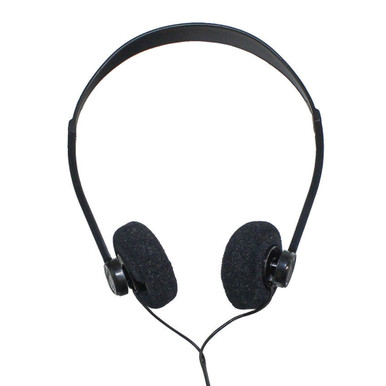
The Soundnetic SN-06 is a bulk disposable, limited-use school headphone at $1.39, and it wins the total-cost argument wherever the same headphone would not survive many uses anyway. For a testing window, a one-day event, or a headset that would otherwise be shared and re-cleaned constantly, a fresh $1.39 unit per student is cheaper than the labor and consumables of sanitizing a reusable pair, and there is nothing to store or repair afterward.

  • $1.39 per unit, low enough to hand out fresh and never collect back.
  • Zero cleaning cost: no covers, spray, or UV cycle between users.
  • No storage, inventory, or repair overhead across the year.
  • Ideal for testing windows, substitutes, and rotating student groups.
  • Bulk-carton pricing drops the per-student cost further at scale.

When a headphone will be used only a handful of times before it would need replacing or deep cleaning anyway, the SN-06 is the cheapest path because the hidden costs of reuse never apply.

Read More : https://www.encoredataproducts.com/low-cost-headphones/soundnetic-sn-06-bulk-disposable-school-limited-use-headphones/
Pros
  • Lowest upfront cost and no cleaning, storage, or repair overhead. High
  • Fresh unit per student eliminates hygiene handling between users. High
  • Cheapest total cost for testing windows and high-turnover use. High
  • Bulk pricing scales down the per-student number for districts. Medium
Cons
  • Cost adds up fast if reused daily; reusables are cheaper past the break-even. High
  • Limited-use build, not meant for months of repeated wear. Medium

HamiltonBuhl Flex-Phones

The HamiltonBuhl Flex-Phones are foam over-ear headphones at $21.89, built to survive the kind of daily abuse that snaps ordinary headsets. Their whole cost case is longevity: with no hard plastic band to crack, they routinely last multiple school years, so a $21.89 pair spread across three years of daily 1:1 use costs a few dollars per student per year, far less than buying a fresh disposable for every session.

  • $21.89 per pair, but amortized over years of daily use.
  • Flexible foam construction resists the breakage that kills cheaper headsets.
  • Washable and cover-compatible for hygienic reuse across students.
  • Best cost-per-student-year for daily classroom and 1:1 device programs.
  • Comfortable, lightweight fit that young students keep on.

For a headphone that the same class uses every day, the Flex-Phones win the long-run math: high durability turns a higher sticker price into the lowest annual cost per student.

Read More : https://www.encoredataproducts.com/over-ear-headphones/hamiltonbuhl-flex-phones-stereo-foam-headphones-blue/
Pros
  • Multi-year durability yields the lowest cost per student per year for daily use. High
  • Foam build resists the breakage that forces repeat purchases. High
  • Washable and cover-compatible for hygienic reuse. Medium
Cons
  • High upfront cost only pays off past the reuse break-even point. High
  • Requires cleaning or covers between students, an ongoing cost. Medium
HamiltonBuhl Flex-Phones

HamiltonBuhl Flex-Phones

The cheaper answer when the same students use them daily

$21.89
Per Unit
Years
Use Life
Foam
Build

HamiltonBuhl Flex-Phones

The cheaper answer when the same students use them daily

The Flex-Phones are not the loser here; they are the winner in the opposite scenario. Ranked as the runner-up only because this article leads with the high-turnover case where disposables win outright, they become the cheaper choice the moment a headphone is used daily by the same students. Run your own number: divide the reusable price by the number of uses and compare it to $1.39. Past roughly 15 to 20 uses, the Flex-Phones cost less per session than a fresh SN-06.

Soundnetic SN-06

Soundnetic SN-06: The cheapest answer when turnover is high

$1.39
Per Unit
$0
Cleaning Cost
1x
Use Model
Shop the SN-06

Which Is Actually Cheaper for Your Classroom

The disposable-versus-reusable decision is a turnover calculation, not a sticker-price one. For testing windows, substitutes, and rotating groups where a headphone is used only a few times, the Soundnetic SN-06 at $1.39 is cheapest because you skip all the cleaning, storage, and repair costs of reuse. For daily 1:1 classrooms, the HamiltonBuhl Flex-Phones at $21.89 win because multi-year durability drives their cost per student per year far below repeat disposable purchases.

Many districts buy both: durable Flex-Phones for everyday classroom carts and a stock of SN-06 disposables for testing windows and shared events. Encore Data Products carries both, accepts school and district purchase orders, and quotes volume pricing on each. Call 866-926-1669 or request a quote to model the cost for your usage pattern.

Frequently Asked Questions

For low-turnover use, yes. If a headphone is used only a handful of times, such as during a testing window, the Soundnetic SN-06 at $1.39 beats a reusable pair because you avoid cleaning, storage, and replacement costs. For daily use, reusables become cheaper per year.
Divide the headphone's price by how many student-uses you expect before replacement, then add any cleaning or cover costs per use. Compare that per-use figure to $1.39 for a disposable. Whichever is lower is cheaper for your usage pattern.
Roughly 15 to 20 uses. Below that, disposables like the SN-06 are cheaper; above it, a durable reusable like the $21.89 Flex-Phones costs less per session because its price spreads across many more uses.
Yes. Reusables need cleaning between students, whether disposable covers, sanitizing spray, or a UV cycle. Factor that per-use cost into the comparison, though it is usually far smaller than repeatedly buying disposables for daily use.
Yes. Many districts stock durable Flex-Phones for daily classroom use and SN-06 disposables for testing and high-turnover events. Encore Data Products carries both, accepts purchase orders, and quotes volume pricing. Call 866-926-1669 for a blended quote.

Useful Resources