
Driveway Paving Estimates Guide: How to Plan a Paver Installation Correctly
A driveway looks simple from the street. A rectangle, maybe a curve, a place to park. Then the estimates start coming in, and suddenly the project turns into excavation depths, base stone, edge restraints, drainage slopes, paver compressive strength, labor access, and square foot pricing that seems to bounce all over the map.
That swing in price is not random. It usually comes down to whether the estimate was built from a real plan or just a surface guess.
I have seen homeowners compare two bids that looked miles apart, paver driveway installation service ridgelineoutdoorliving.com only to find out one contractor priced a proper base for vehicle traffic and the other priced something paving contractors near me closer to a patio build. On paper, both were called paver driveways. In practice, they were not the same thing at all. If you want useful driveway paving estimates, you need to know what belongs in the number before you compare the number.
The estimate starts below the pavers
Most people focus first on the pavers themselves, which makes sense because that is the visible finish. The trouble is that driveway performance is decided mostly underneath. A good installer worries about subgrade stability, excavation depth, base compaction, and how water will leave the surface. The pavers matter a lot, but they cannot compensate for weak groundwork.
This is where many driveway replacement budget surprises come from. A contractor may arrive, scrape off the old asphalt or concrete, and discover soft soil, buried roots, broken utility trenches, or standing water conditions that were invisible from above. Those issues drive up driveway excavation costs fast. They also explain why one site can support affordable driveway paving options while another needs heavier prep and a very different budget.
For a true paver driveway project budgeting exercise, start with site conditions. Ask yourself how the driveway is used. Is it one sedan and occasional guests, or is it two SUVs, a delivery van, and regular turning movements near the garage? Straight parking loads are easier on pavers than tight, repeated tire scrubbing. That detail alone can affect driveway paver material selection and installation method.
Why driveways need different pavers than patios
A patio paver is not automatically a driveway paver. That sounds obvious, but it gets missed all the time, especially when people fall in love with a style they saw in a backyard project.
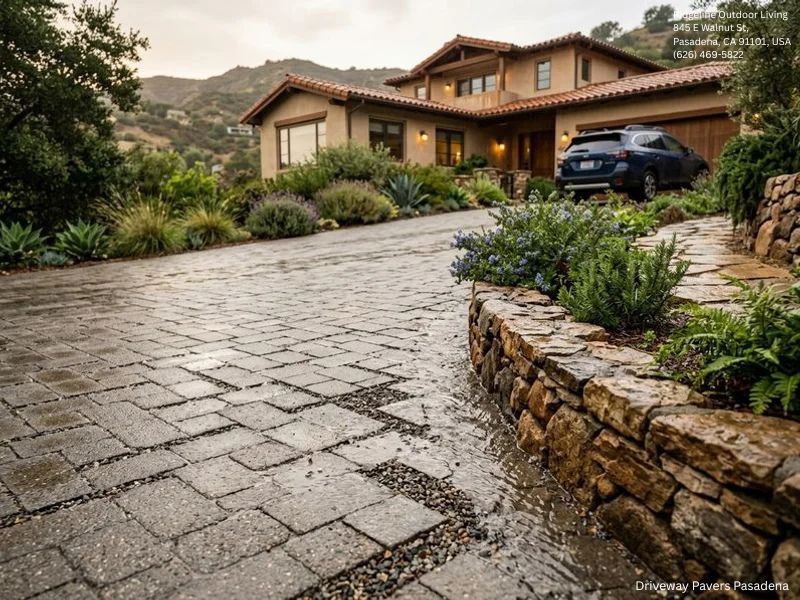
Driveways need vehicle rated driveway pavers, not just anything that looks substantial. That means paying attention to driveway paver thickness, paver compressive strength, and overall system design. Thin decorative units may perform beautifully in foot traffic and fail early under vehicle load. The same goes for oversized products that look sleek but are not designed for cars.
When I review estimates, I want to see the actual paver product named, not just “installed pavers.” That tells you whether the quote is built around heavy duty driveway pavers or around something generic. Good contractors know the difference between pedestrian products and weather resistant driveway pavers meant for cars, freeze thaw cycles, deicing salts, and repeated load transfer.
Interlocking concrete paving stones are popular for good reason. They are widely available, structurally reliable when installed over the right base, and usually give the broadest range of driveway paver color options and driveway paver surface finishes. Concrete driveway pavers also tend to make replacement and repair easier because individual units can be lifted and reset if needed.
Brick driveway paving has a different appeal. Real clay brick has a classic look that works especially well on older homes and traditional architecture. Brick driveway paving cost can be competitive in some markets, but supply varies, and you need to make sure the product is intended for vehicular use. The look is timeless, but performance depends heavily on the specific brick and the base below it.
Natural stone driveway pavers can be stunning, though this is often where premium driveway pavers cost rises sharply. Dense granite performs differently from softer stone. Some natural stone products are excellent for driveways, others are better reserved for walks and terraces. With stone, beauty should never outrun engineering.
What really drives price per square foot
People often search for driveway paver cost per square foot because it feels like the cleanest way to compare jobs. It is useful, but only if you understand what sits inside the number.
A basic concrete paver driveway pricing range may look attractive until you realize it excludes demolition, deep excavation, poor soil correction, drainage work, or complex laying patterns. A higher bid may include all of that and actually be the safer number.
These are the cost drivers that matter most:
That is the heart of most paver driveway cost factors. If you collect estimates without matching these assumptions, you are not really comparing the same project.
Material choices and how they change the estimate
Concrete driveway pavers are usually the middle ground for cost, design range, and durability. They come in many sizes, colors, and textures, from smooth contemporary slabs to textured driveway pavers that mimic stone. If the driveway gets slick in rain or snow, slip resistant driveway pavers with a more tactile finish are worth considering. On steep driveways, that texture is not just aesthetic, it can improve footing and reduce tire slip.
Permeable concrete pavers deserve special attention. In the right setting, they manage runoff, reduce puddling, and can help with drainage compliance. They are not always cheaper up front, and the base design differs from a standard paver system, but in some projects they solve a water problem that would otherwise require separate drainage infrastructure. That can change the whole driveway installation cost breakdown.
Large format driveway pavers are popular because they look clean and modern. They can work well, but not every large slab belongs in a vehicular application. Some homeowners assume bigger means stronger. Often it just means heavier and trickier to handle. Small format paving stones, by contrast, distribute movement well, accommodate curves more easily, and have a long track record in driveways. A product’s shape should match both the aesthetic and the load demands.
Driveway paver surface finishes also affect price and maintenance. Tumbled finishes can hide wear and blend repairs nicely. Smooth or sharpened surfaces can look elegant but may show tire marks, deicing residue, or staining more quickly. That does not make them wrong, only less forgiving. Driveway paver wear resistance becomes a practical issue if you have turning tires, snow shovels, or frequent plowing.
The structural questions homeowners should ask
When a bid lands in your inbox, style and color are easy to spot. Structure is not. Yet structure decides driveway paver durability.
Ask how deep the excavation will be. Ask what base material will be used. Ask how it will be compacted, in how many lifts, and what the final thickness will be after compaction. Ask whether the contractor is accounting for edge restraints designed for vehicle traffic. Ask how the driveway will shed water. A one inch puddle near the garage can shorten the life of any paving system.
If you live in a freeze thaw climate, these questions matter even more. Water trapped in a weak base can heave and settle sections unpredictably. A beautiful driveway installed over a shortcut base often looks fine on day one and rough by year three. That is one reason paver driveway long term value can exceed what homeowners expect, but only when the installation is done properly.
The paver itself should also be discussed plainly. What is the driveway paver thickness? Is the product rated for vehicular use? How does its paver compressive strength compare with other options under consideration? Specifications vary by manufacturer and region, so I would rather hear a contractor explain the actual product choice than throw around broad, unverified numbers.
Drainage is where good estimates separate themselves
Water is relentless. It finds low spots, weak joints, and vulnerable transitions. A driveway estimate that ignores drainage is not finished, even if the paver choice is excellent.
A proper slope away from the house is a basic start, but some sites need more. If the driveway runs downhill into the garage, a trench drain may be required. If runoff crosses the path from neighboring grades, the project may need swales, catch basins, or a permeable system. If the old driveway failed because water sat on the surface, the replacement should directly address that history.
This is also where paver driveway versus concrete cost and paver driveway versus asphalt cost deserve a more careful look. Plain poured concrete or asphalt may come in lower upfront on some projects, but if the site needs drainage work either way, the gap can narrow. And when repairs become necessary later, pavers often offer easier localized fixes. That affects driveway paver lifecycle cost, not just the initial contract number.
Labor is a huge part of the bill, and for good reason
Homeowners sometimes focus so intensely on driveway paving material costs that they underestimate labor. On a paver job, labor is not a side note. It is a major share of the price because precision matters at every step.
Paver driveway labor cost includes layout, demolition, excavation, base installation, compaction, screeding, laying pattern, cuts, restraint installation, joint filling, and cleanup. Tight joints and clean edge work take time. So do circular cuts around landscaping islands, soldier course borders, and transitions to garage slabs or sidewalks.
This is one reason a cheap estimate can be misleading. If labor seems unusually low, ask what is being skipped. Is the crew smaller than needed? Is the base shallow? Are they assuming minimal cutting? Are they leaving disposal out of the number? I have seen bids win on price because they were missing key scope items the homeowner did not know to ask about.
How to compare estimates without getting lost
When you gather driveway paving estimates, ask each paver driveway design ideas contractor to price the same scope as closely as possible. If one proposes standard interlocking concrete paving stones and another prices premium natural stone without naming the difference clearly, you have no meaningful comparison. The same goes for excavation depth, base specification, and drainage.
The cleanest way to compare is to line up the hidden parts first. Make sure the old driveway removal, excavation depth, base thickness, compaction process, bedding layer, paver product, edge restraints, joint material, and drainage provisions are all spelled out. Once that backbone matches, then the price tells a clearer story.
If one contractor strongly recommends permeable concrete pavers while another recommends a conventional system, do not treat that like a simple style difference. It is a design decision with cost, maintenance, and drainage implications. Ask why they chose it and what site condition drove that recommendation.
Budgeting for the full life of the driveway
Most people think first about the contract price, which is natural. Smart planning goes one layer deeper and looks at total ownership cost.
A paver driveway often costs more upfront than plain asphalt, and in some regions more than a basic concrete slab. But paver driveway long term value can be strong because individual units can be repaired without tearing out the whole field, and quality systems tend to age gracefully when maintained. That does not mean maintenance is zero. It means the maintenance is usually more manageable and more targeted.
Driveway maintenance expenses might include joint sand replenishment, occasional weed control at edges, stain cleaning, sealing if desired, and isolated reset work if settling occurs. In snowy climates, plow technique matters. Rubber edged blades and a driver who understands pavers will reduce chipping and gouging. None of that is dramatic, but it belongs in the budget.
This is where driveway paving return on investment becomes a practical question rather than a sales slogan. If the home value, curb appeal, and service life matter to you, the cheapest install is not always the lowest cost decision. A well built paver driveway can add visual character and hold up for a very long time. A badly built bargain job can become an expensive do-over.
Where homeowners overspend, and where they should not cut
The easiest place to overspend is decorative complexity. Fancy borders, multiple color blends, inset medallions, and elaborate patterns can look great, but they quickly raise both material waste and labor time. Sometimes a simpler field with one clean border looks better and costs less.
The riskiest place to cut is the base. If the estimate is lower because the excavation is shallow or the compaction plan is vague, that savings is fragile. Vehicle traffic exposes shortcuts fast. Another risky cut is choosing a paver based only on appearance while ignoring whether it is truly a vehicle rated product.
A sensible way to control cost is to simplify shape and detailing while preserving structure. Straighten a curve if it does not matter to the look. Reduce the number of accent bands. Choose a concrete paver line instead of imported stone. Those choices can keep the project in range without undermining performance.
A practical checklist before you sign
Use this short filter before accepting a bid:
That last point matters more than most homeowners expect. Exclusions are often where a project budget gets stretched.
Making sense of “cheap” and “premium”
There is a place for affordable driveway paving options, and there is a place for premium driveway pavers cost. The key is matching the level of investment to the house, the neighborhood, and how long you plan to stay.
If this is a rental property or a modest home in a market where overimprovement will not be recovered, a durable concrete paver system in a straightforward pattern may be the smartest call. If the home is high value and architecture driven, premium natural stone driveway pavers or a custom brick driveway paving design may make sense because the finish becomes part of the property’s identity.
Neither choice is automatically better. The mistake is spending premium money on a weak installation or demanding a bargain price for a site that clearly requires premium prep. Good estimating is mostly about honesty. Honest conditions, honest materials, honest labor, honest risk.
The estimate you want is the one that explains itself
The best driveway paving estimates are not always the shortest and rarely the prettiest. They are the ones that explain what will happen on your property in enough detail that you can picture the job from start to finish.
You should understand why a certain paver was chosen, why the base is a certain depth, how drainage will be handled, where the labor hours are going, and what could change if hidden site conditions show up. Once those answers are clear, the price starts to make sense. More important, you can tell whether you are buying a driveway that merely looks good at handoff or one that will keep earning its cost over time.
That is the real goal of planning a paver installation correctly. Not just getting a number, but getting the right number for the right driveway.